Introduction
In the world of climate control, commercial ceiling fans have become a vital component for improving air circulation, enhancing comfort, and reducing energy consumption in large-scale facilities. From warehouses and factories to gyms, restaurants, shopping malls, and event halls, these powerful fans are designed to serve demanding environments where residential fans simply won’t suffice. Commercial ceiling fans provide cost-effective and sustainable airflow solutions while maintaining aesthetic appeal and operational efficiency.
What Are Commercial Ceiling Fans?
Commercial ceiling fans are heavy-duty fans specifically engineered for use in large, high-traffic, or spacious areas. Unlike standard ceiling fans used in homes, these fans are built with larger blades (often exceeding 60 inches in diameter), robust motors, and stronger materials to withstand extended operation and more intense conditions. They are often part of HVAC (Heating, Ventilation, and Air Conditioning) strategies, improving indoor air quality, maintaining consistent temperature, and reducing reliance on air conditioning systems.
Key Features of Commercial Ceiling Fans
Durability is a defining characteristic of commercial fans. Most models are constructed with industrial-grade materials such as aluminum, steel, or composite alloys that resist rust, corrosion, and wear. Their motors are optimized for continuous use, even in dusty or humid environments, with sealed bearings and thermal overload protection.
Blade design is critical for performance. Many commercial fans feature aerodynamic blades that are curved or angled to optimize airflow over wider areas. Some models include high-volume, low-speed (HVLS) technology, which allows the fan to move large volumes of air with minimal energy.
Energy efficiency is another hallmark. Commercial ceiling fans consume significantly less power than traditional air conditioning systems while maintaining comfort by improving perceived cooling. Some models are compatible with smart controls, motion sensors, and energy management systems for maximum automation.
Applications Across Industries
In warehouses and distribution centers, commercial ceiling fans help regulate temperature and air movement. These large facilities often lack central cooling, and fans play a crucial role in preventing heat build-up, protecting inventory, and ensuring staff comfort. HVLS fans are particularly beneficial, as they create a gentle breeze that cools without disrupting sensitive equipment.
Manufacturing plants often generate substantial heat from machinery and production processes. Ceiling fans help ventilate workspaces, displace hot air, and reduce the risk of overheating. This not only protects equipment but also boosts worker productivity and safety.
Retail stores and shopping malls rely on ceiling fans to supplement HVAC systems, ensuring consistent temperature control across large, open areas. Fans also enhance the shopping experience by creating a welcoming atmosphere.
Restaurants and cafes use fans for both functional and aesthetic purposes. In dining areas, fans provide cooling without creating direct drafts. Many ceiling fans in these settings are chosen for their sleek design and quiet operation, which complements the décor while maintaining comfort.
Gyms and fitness centers are another major market. Proper air circulation is essential in workout spaces to reduce humidity, dissipate odors, and keep patrons comfortable during high-intensity sessions. Fans help prevent condensation and maintain clean, breathable air.
Educational institutions and auditoriums benefit from ceiling fans in large classrooms, halls, and libraries. They promote concentration by maintaining comfortable temperatures and reducing stuffiness, especially in non-air-conditioned buildings.
Greenhouses and agricultural buildings use ceiling fans to regulate humidity, prevent mildew, and promote healthy plant growth. In livestock housing, fans keep animals cool and comfortable, supporting productivity and well-being.
Advantages of Using Commercial Ceiling Fans
Energy Savings: One of the greatest advantages of commercial ceiling fans is their energy efficiency. By improving air circulation, fans reduce the need for air conditioning, especially in moderate climates or shoulder seasons. When used in conjunction with HVAC systems, fans help distribute conditioned air evenly, allowing thermostats to be set a few degrees higher without compromising comfort. This leads to significant savings in energy costs.
Improved Air Quality: Good air circulation reduces the buildup of stale air, moisture, dust, and contaminants. This is particularly important in industrial or commercial environments where poor air quality can lead to health issues, equipment malfunctions, or compliance violations.
Temperature Consistency: Ceiling fans eliminate hot and cold spots by mixing air layers. In winter, many models include reverse functions that push warm air down from ceilings, enhancing heating efficiency. This balanced temperature distribution increases comfort and productivity.
Enhanced Comfort: The steady breeze generated by ceiling fans helps evaporate sweat and cool the skin, making people feel up to 4 degrees cooler. In workplaces, this translates to better concentration, lower fatigue, and higher morale.
Aesthetic Value: Modern commercial ceiling fans come in sleek designs and a variety of finishes. In hospitality or retail settings, they can enhance the look of a space while performing a practical function.
Low Maintenance and Longevity: Designed for tough environments, commercial fans require minimal maintenance. Features like enclosed motors, rust-resistant coatings, and easy-clean blades contribute to long operational life.
High-Volume, Low-Speed (HVLS) Technology
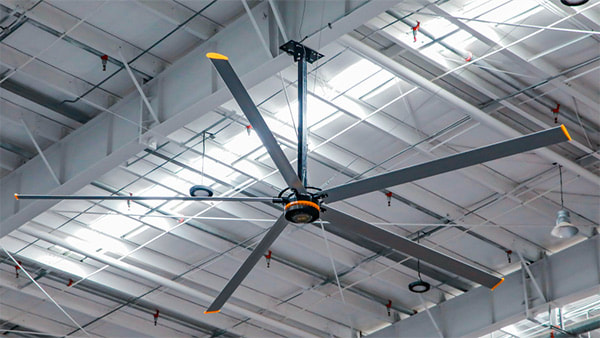
HVLS fans represent a major innovation in the ceiling fan industry. These fans have blade diameters ranging from 7 to 24 feet and are engineered to move large volumes of air at slow speeds. Instead of producing a direct breeze, HVLS fans create a large column of air that gently flows across the space, delivering uniform airflow and coverage.
HVLS fans are ideal for warehouses, gymnasiums, and other high-ceilinged spaces where air stratification is a problem. By blending layers of air, they eliminate pockets of hot or cold air and help maintain consistent ambient conditions.
Choosing the Right Commercial Ceiling Fan
Several factors should be considered when selecting a commercial ceiling fan:
Room Size and Ceiling Height: The larger the space and the higher the ceiling, the bigger the fan required. HVLS fans are best for ceilings over 12 feet. For smaller commercial rooms, fans in the 60–84 inch range might suffice.
Blade Material and Shape: Aluminum and composite blades are durable and corrosion-resistant. Blade shape affects airflow patterns, noise level, and aesthetics.
Motor Type: Direct drive motors are quieter and more efficient than belt-driven types. For settings where silence is crucial, such as restaurants or schools, go for low-decibel models.
Speed and Reversibility: Adjustable speeds provide control over airflow intensity. A reversible motor helps maintain comfort during both summer and winter months.
Controls and Integration: Fans with smart controls or building automation system compatibility offer more flexibility and energy optimization. Some fans include wireless remotes, wall-mounted controls, or mobile app integration.
Safety and Compliance: Ensure fans meet safety standards such as OSHA, UL, and CE certifications, especially in industrial environments.
Installation and Maintenance
Proper installation is key to fan performance and safety. Always follow manufacturer guidelines or hire certified technicians. Fan placement should avoid obstacles like beams, lights, and sprinklers. Secure mounting and balancing reduce vibration and noise.
Routine maintenance includes dusting blades, checking mounting systems, lubricating motor parts (if applicable), and inspecting control systems. Many modern fans are designed for easy cleaning and offer maintenance alerts through connected systems.
Future Trends in Commercial Ceiling Fans
With the rising demand for sustainable building practices, commercial ceiling fans are evolving. More models now incorporate smart energy management systems, sensors for automatic operation, and real-time diagnostics. Materials are becoming more eco-friendly, and fans are being designed to integrate with solar and renewable energy systems.
Architectural design is also influencing fan aesthetics. Custom finishes, minimalist shapes, and integrated lighting options are expanding the role of ceiling fans as both climate tools and design elements.
Conclusion
Commercial ceiling fans have moved far beyond basic air movement. They are now integral to creating healthier, more efficient, and aesthetically pleasing environments across a range of industries. Whether you’re managing a warehouse, gym, restaurant, or retail space, investing in the right commercial ceiling fan can enhance comfort, improve productivity, and reduce energy costs. With thoughtful selection, proper installation, and minimal maintenance, these fans offer long-term value and environmental benefits—making them a smart choice for any modern commercial space.