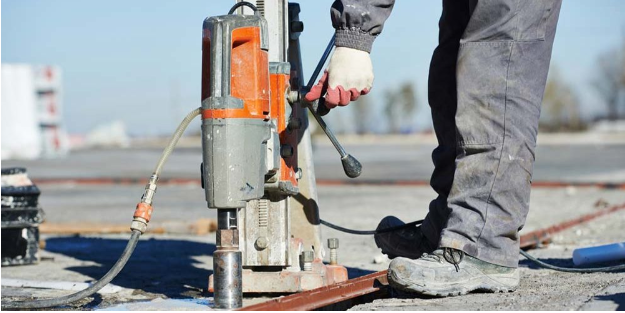
Concrete drilling plays a major role in construction, renovation, and infrastructure projects. Whether it’s for installing pipes, electrical wiring, or making way for anchor bolts, drilling into concrete is often necessary.
Instead of breaking an entire wall or slab, professionals use specialized drills to create precise holes. This process not only saves time and effort but also ensures accuracy. In this post, we’ll look at five key advantages of concrete drilling and why it’s widely used in various industries.
1. Precision and Accuracy
One of the biggest advantages of concrete drilling is the precision it offers. Unlike traditional hammering or breaking methods, drilling allows workers to create clean and exact holes. This is particularly useful when installing pipes, cables, or support rods, as even a slight miscalculation can cause delays or structural issues.
Modern drilling equipment comes with advanced technology that helps maintain accuracy, ensuring that the holes are of the right depth and diameter. Precision in drilling also reduces the chances of damaging the surrounding area, making the process more reliable.
2. Time and Labor Efficiency
Breaking through concrete manually can be time-consuming and physically demanding. Concrete drilling, on the other hand, speeds up the process and reduces the effort needed. With the right equipment, workers can drill through concrete in a matter of minutes, allowing them to complete projects faster.
This is especially important in large-scale construction, where time is a crucial factor. When work gets done quickly, labor costs also decrease. Businesses and contractors can allocate their workforce more effectively, improving overall productivity.
3. Reduced Structural Damage
Using traditional methods like chiseling or hammering can cause unnecessary cracks and weaken the overall structure. Concrete drilling eliminates this problem by focusing only on the area that needs to be drilled.
The process is controlled and minimizes vibrations, reducing the chances of surrounding materials getting damaged. This is essential for buildings, bridges, and roads where maintaining structural integrity is a top priority.
4. Versatility in Different Applications
Concrete drilling is not limited to construction alone. It is widely used in plumbing, electrical work, and even in the installation of security systems. Contractors and technicians rely on drilling to create openings for wiring, drainage systems, and ventilation.
It is also useful in roadwork and maintenance projects, where precise holes are needed for signs, barriers, or expansion joints. With different types of drill bits available, professionals can drill through various surfaces, including reinforced concrete and stone.
5. Cost-Effectiveness
Saving money is a key concern in any construction or renovation project. Concrete drilling helps reduce expenses in multiple ways. Since it requires less labor and takes less time, overall project costs decrease. Additionally, because it prevents unnecessary damage, there is no need for expensive repairs or additional materials.
Many companies prefer drilling because it is a more affordable and efficient option compared to traditional methods. Investing in high-quality drilling equipment or hiring professionals for the job ensures that projects stay within budget without compromising quality.
Conclusion
Concrete drilling is a crucial part of modern construction and infrastructure development. Its ability to provide precise results, save time and labor, prevent structural damage, and offer versatility makes it a preferred method in many industries.
Additionally, its cost-effectiveness makes it a smart choice for contractors and businesses looking to maximize efficiency. Whether it’s for a small home improvement project or a large-scale construction job, concrete drilling is an effective and reliable solution.